


Best Activities for Executive Function at Home

A child may know the answer to a maths question yet still struggle to begin the page, keep track of the steps, cope when an answer is wrong, or finish before moving on. These are everyday signs that executive function needs practice. The best activities for executive function are not necessarily worksheets or expensive games. They are purposeful, enjoyable experiences that give children repeated chances to plan, remember, focus, adapt and regulate their emotions.
Executive function develops gradually from the preschool years through adolescence. It supports learning across every subject, but it also helps children pack a school bag, take turns in conversation, follow a recipe, prepare for a test and recover after disappointment. For families, the goal is not perfect behaviour or constant independence. It is to build skills steadily, with the right amount of support for each child.
What executive function looks like in daily learning
Executive function is a group of thinking and self-management skills. Working memory helps a child hold information in mind, such as remembering three instructions. Inhibitory control helps them pause before reacting or acting on an impulse. Cognitive flexibility helps them change strategy when a plan does not work.
Planning, organisation, time awareness, task initiation and emotional regulation are closely connected. A child who says, “I do not know what to do,” may need help identifying the first step. A child who abandons a puzzle may need a manageable challenge and language for handling frustration. These are teachable skills, not fixed personality traits.
The most useful activities make the skill visible. Rather than saying “concentrate”, try “Let’s decide what needs to happen first, next and last.” Rather than “calm down”, try “Your body is telling us this feels hard. Shall we take three slow breaths, then choose the next step?” Clear language gives children a process they can gradually use for themselves.
Best activities for executive function by skill
Planning and organisation through real responsibilities
Small household responsibilities are excellent practice because the result matters. Ask a younger child to help prepare the table using a simple picture checklist. An older child can plan what they need for a club, organise materials for a science task, or make a short revision plan for the week.
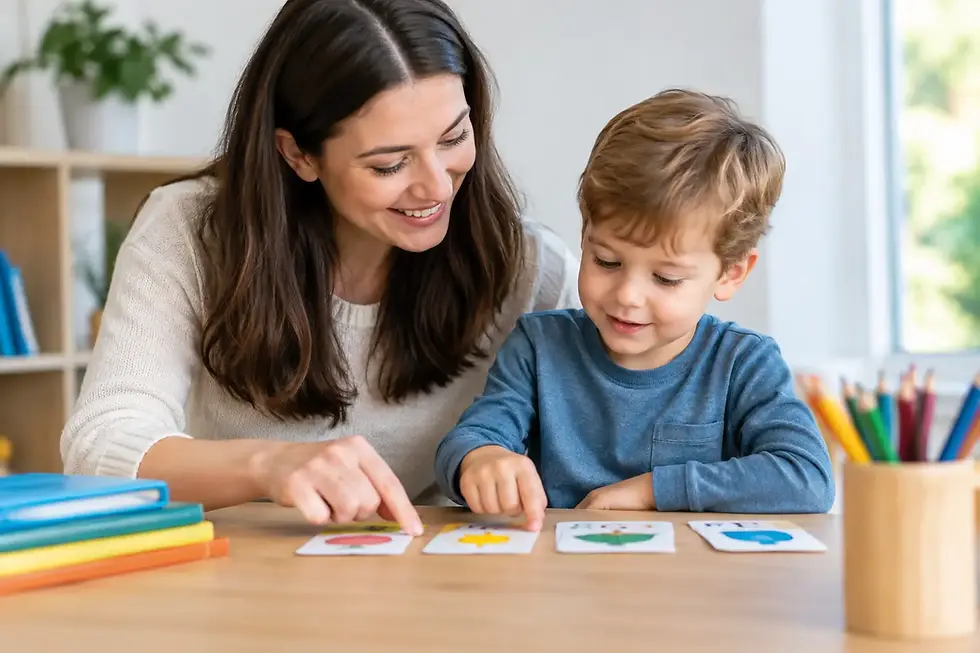
Begin with a task that has three to five steps. For example: choose clothes, put them in the bag, add a water bottle, then check the bag against the list. Let children tick off completed steps or move picture cards from “to do” to “done”. This turns an abstract demand such as “get ready” into an achievable sequence.
There is a trade-off. If an adult does every step to save time, the child loses valuable practice. If the task is too open-ended, they may feel overwhelmed. Offer a structure first, then reduce prompts as confidence grows. A visual routine is often particularly helpful for children who are still developing language, attention or self-regulation.
Working memory games that require listening and recall
Working memory grows when children have to retain information briefly and use it. Classic games such as Simon Says, I Spy, matching pairs and simple clapping patterns are effective because they are social, low-pressure and easy to adjust.
Try giving a sequence of actions: “Touch your head, clap twice and sit down.” Once that feels easy, add one action or invite the child to create a sequence for you. During reading time, pause and ask a child to recall what happened first, what the character wanted, and what might happen next. In maths, ask them to explain the steps they used rather than only giving the final answer.
For teenagers, working memory practice can look more practical. Ask them to listen to a short set of instructions for a recipe, a timetable change or an assignment, then repeat the key actions back before starting. The aim is not to catch mistakes. It is to encourage the habit of pausing, holding information and checking understanding.
Board games for turn-taking and flexible thinking
Board games provide repeated practice with rules, waiting, strategy and coping with an outcome that is not always favourable. Chess, card games, draughts, logic puzzles and age-appropriate cooperative games can all support executive function.
Choose the game carefully. A competitive game can be motivating for one child and discouraging for another. Cooperative games, where players work together towards a shared goal, may be a better starting point for children who find losing difficult. It also helps to model calm language: “That move did not work as I hoped. I will try a different plan next turn.”
Chess is especially useful for planning ahead, considering consequences and resisting the urge to make the first available move. For a beginner, however, a full game may be too demanding. Start with mini-challenges, such as finding one safe move or protecting a piece, so that success remains within reach.
Movement games for attention and self-control
Executive function is not built only while sitting still. Movement games ask children to listen, stop, start and adjust their actions. Try musical statues, red light-green light, follow-the-leader, obstacle courses, dance routines or yoga poses held for a short count.
An obstacle course can be made more challenging by asking the child to plan the route before beginning, remember two rules, or change direction when they hear a signal. This supports attention and flexibility while giving energetic children an appropriate way to practise control.
For children who become dysregulated, movement should not be presented as a punishment or a way to “get rid of energy”. A short walk, stretching break or calm breathing routine can be part of a personalised regulation plan. Some children need active movement before they can focus; others need a quiet sensory break. Observing patterns matters more than using one approach for every child.
Cooking and creative projects for sequencing
Cooking, art, building and coding projects bring several executive-function skills together. A child must gather materials, follow a sequence, manage time, solve problems and tidy up afterwards. The activity naturally shows why planning matters.
When baking, ask children to read the recipe, predict what they will need, set out equipment and check each completed step. If something goes wrong, resist fixing it immediately. Ask, “What do you notice?” and “What could we try now?” A slightly lopsided cake can teach more flexible thinking than a flawless one made entirely by an adult.
Creative projects also allow choice, which increases engagement. A younger child might design a collage with a limited set of materials. An older child might plan a poster, build a model or create a short presentation. Keep the project bounded by a clear finish point. “Make anything you like” can be freeing for some learners but paralysing for others.
Goal setting and reflection for older learners
As school demands increase, children benefit from learning how to break longer tasks into smaller actions. A large assignment becomes less intimidating when it is turned into steps: understand the question, gather notes, make an outline, write a first paragraph, review and submit.
A weekly planning conversation can be brief and effective. Ask what is coming up, which task needs attention first, what materials are required and where support may be needed. Use a paper planner, whiteboard or digital calendar according to the learner’s preference. The tool is less important than the routine of checking it.
Reflection is where the learning becomes transferable. After homework, sport or a project, ask: “What helped you get started?” “Where did you get stuck?” and “What will you do differently next time?” Keep the tone curious, not corrective. Children are more likely to develop insight when they do not feel judged.
How adults can make activities work
The same activity can build confidence or create stress depending on how it is introduced. Start with a success level that feels realistic, give one instruction at a time when needed, and praise the process specifically. “You checked your list before you packed” is more useful than a general “well done”.
Predictable routines help, especially during busy mornings, homework time and transitions. At the same time, children need safe chances to cope with small changes. If Friday usually means a familiar activity, occasionally invite them to choose between two alternatives and talk through the new plan. Flexibility is practised through manageable change, not sudden chaos.
Families should also expect progress to be uneven. Tiredness, hunger, worry, illness and a demanding school day can all affect a child’s ability to manage tasks. A child who can organise a bag on Saturday may still need support on a rushed Monday morning. This does not mean the strategy has failed. It means executive function is developing in real-life conditions.
For children who need more targeted support, structured teaching can make a meaningful difference. At StudentScholars, learning activities can be adapted across academic tutoring, special education support, therapy-informed programmes and enrichment classes so children can practise planning, communication, confidence and self-management alongside subject learning.
Choose one routine or activity to begin this week, and keep it short enough for success. When children experience themselves as capable planners, problem-solvers and learners, the skills they practise today can support them far beyond the classroom.


Comments